
 Skip to content


Fire & Security Systems
You need to be sure your people, assets and places are protected and monitored at all times. As the UK’s most comprehensive fire and security organisation, we provide bespoke, compliant and intelligent solutions. From risk assessment and systems design to installation, maintenance and monitoring, we’ve got every need covered. Delivering safety, security and compliance, you’re supported to protect what matters most.
- Be inspired
- Our services
- Case studies
- Get in touch
Be inspired
- Insight
- 7 May 2024
- Podcasts
- 21 March 2024
- News
- 8 September 2023
How we can help
Whether you’re looking to upgrade existing systems or protect a new space, our self-delivered and vendor-agnostic services combine industry-leading expertise with the latest technology. Learn more about how we deliver safety, security, compliance and peace of mind below.
Assured safety – even as risks evolve
Our team of fire and security experts conduct thorough risk assessments for any environment. This identifies the best ways to protect your people and assets, pinpointing threats and vulnerabilities across your estate. You are empowered to take a structured and proactive approach towards mitigating risks.
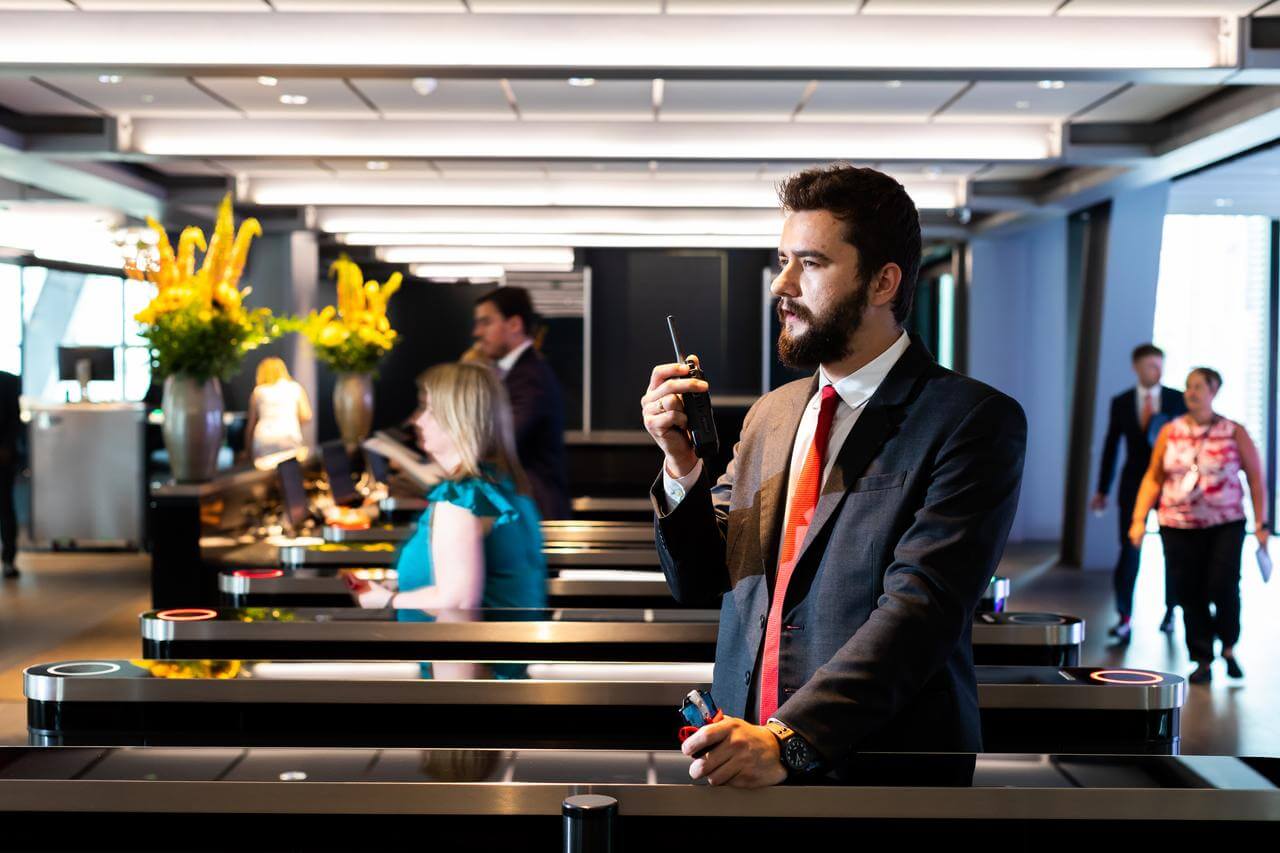
Maintain compliance and be ready for regulatory changes
With compliance demands increasing in quantity and complexity, it can be a struggle to keep on top of changes. We make sure you’re aligned with relevant legislation. Our experts stay on top of crucial changes through regular training and active involvement with industry bodies. As a result, compliance penalties and insurance issues become low level risks. It’s why we’re a trusted fire and security compliance partner, with proven delivery across 80,000 UK sites.
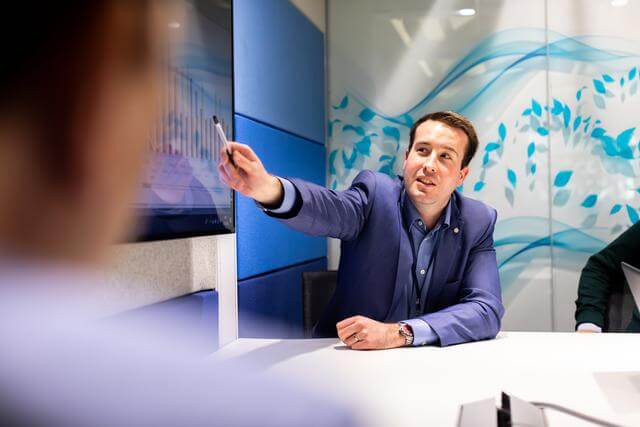
Get unified protection through end-to-end capability
Keep safe, secure and compliant thanks to Mitie’s agile solutions and rapid response, delivered nationally 24/7. From standalone fire detection and security systems, to complex, AI-enabled, multi-site solutions, we can accommodate your unique needs. And because we take a vendor-agnostic approach, you can be sure of the best response for your organisation.
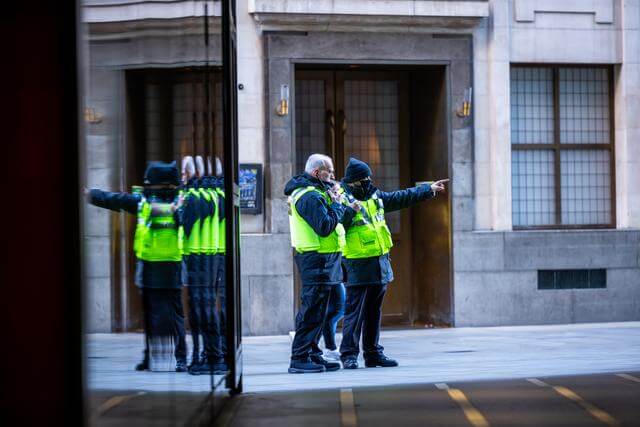
Tailored solutions designed by experts
You can be confident your estate is protected by a qualified partner with independently verified expertise. Over 2,500 experienced colleagues help to deliver our Fire and Security services, while more than 800 highly trained engineers ensure your critical systems operate seamlessly. And thanks to Mitie’s engineer training academy, our colleagues are kept up-to-date on all the latest technology and emerging operational scenarios.

Always-on monitoring for your peace of mind
Round-the-clock remote monitoring safeguards your systems, assets and people, whatever the risks. Coordinated from our NSI Gold-accredited alarm receiving centre, iSOC, in Northern Ireland, our dedicated experts monitor and manage datapoints, vehicles, lone workers and physical and virtual access points. You benefit from eyes on what’s important, with safety assured for people, assets and places.
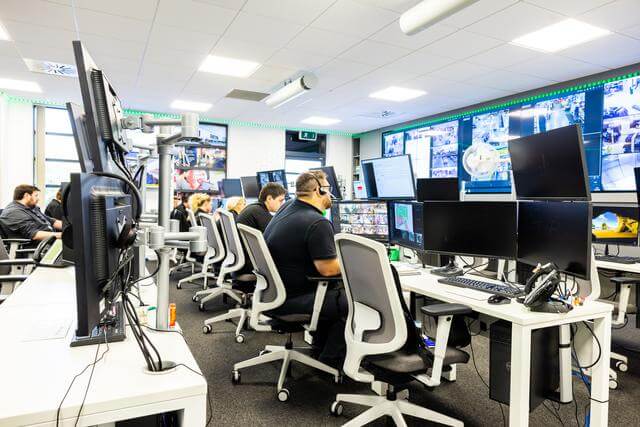
Innovation for a secure future
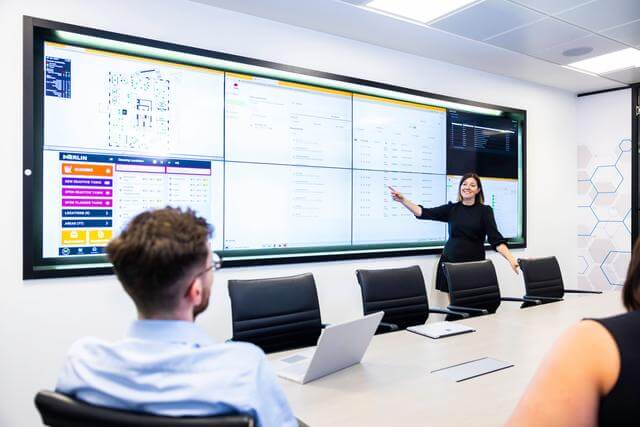
With years of experience across a broad spectrum of industries, we tailor fire and security systems to your specific needs. From design and project management to installation, monitoring and maintenance, we make sure your systems work together seamlessly. Our integrated technology and unrivalled data and insight capabilities enable us to deliver maximum protection, helping you prepare for future needs.
24/7/365
availability
120,000+
lone workers protected by our systems
160,000+
systems maintained
22,000+
CCTV, body worn videos and alarm connections monitored
Choose a systems capability
Choose a systems product
Our key technology partners
We work with a wide variety of key technology partners, to provide the most appropriate system for your needs.




















A trusted partner of industry leaders in every sector











Case studies
- Case study
- 20 October 2020
- Case study
- 2 February 2020
- Case study
- 2 February 2020

S2, E2: How can we make the places in which we live and work safer?
Our world is changing, and security and intelligence services are constantly evolving and adapting to keep up. Chris goes behinds the scenes at Mitie’s Intelligence Hub to discover how the insight and intelligence collected there is driving action on the ground to keep our communities safe. We also discover how personal technology is being used to tackle the rise of violence against women and girls.
Subscribe or listen on Apple Podcasts, Spotify or Amazon Music.
Our world is changing, and security and intelligence services are constantly evolving and adapting to keep up. Chris goes behinds the scenes at Mitie’s Intelligence Hub to discover how the insight and intelligence collected there is driving action on the ground to keep our communities safe. We also discover how personal technology is being used to tackle the rise of violence against women and girls.
Subscribe or listen on Apple Podcasts, Spotify or Amazon Music.



Series 2, Episode 2: How can we make the places in which we live and work safer?
—
Chris: Welcome to the High-Performing Places podcast from Mitie, hosted by us, the Workplace Geeks. My name’s Chris Moriarty…
Ian: And I’m Ian Ellison.
Chris: And we’re back, once again, visiting fascinating workplaces and meeting some truly committed people, to address the question running throughout this second series: what makes a place truly high-performing?
Ian: Today we’re going behind the scenes at Mitie’s Intelligence Security Operations Centre – their ISOC, for short – in a top-secret location I’m not sure we have the security clearance to divulge…
Chris: …it’s in Northampton, Ian. I was the one that went there.
Ian: Oi! Stop ruining the sense of intrigue I’m trying to create…
In this episode we’re exploring what happens behind the scenes, to consider what makes the places that we live and work in safer. And as well as visiting Mitie’s ISOC, we’re also speaking to a tech entrepreneur and an ex-senior ranking member of the UK police force, to appreciate both the breadth and complexity of the security and safety issues we currently face – whether we’re aware of them or not – and some innovative and collaborative solutions to tackle them.
Chris: Because the risks we face today to community and personal safety, from opportunistic and organised crime, cyber threats, protests and political unrest, all the way through to terrorism, are – from a prevention perspective – all addressed by an interconnected system.
Ian: And a key cog within that system is Mitie.
—
Chris: Now to help set the scene, we’re going to revisit someone we met in series one.
Jason: My name is Jason Towse. I’m the Managing Director of Business Services within Mitie.
Chris: Jason has been in the security game for well over three decades, with Mitie for the past 13 years. He’s seen, first hand, how today’s security needs have evolved way beyond officers and padlocks, to encompass intelligence, people, and technology working seamlessly together. We asked Jason to help us appreciate how business security has evolved over the last 20 years.
Jason: 9/11 is a significant date in many people’s memories for many different reasons. It was a pivotal moment in the world of security ’cause it started to change the way we think about security. Started to change the way that buyers bought and acquired security.
And what it taught us very quickly is that security issues are not just local. They’re international. You didn’t just have 9/11, you had the London bombings as well. You had 7/7. So, there was a sort of trend within security where it was driven by the risk and the required level of visibility that the C-suite wanted of a security.
Chris: As Jason suggests, and I think most people would recognise, 9/11 was a significant moment in recent history. What’s important to our story here is how it drove a transformation in the role – and expectations – of corporate security.
Ian: Right. It’s always been an operational consideration, either stand alone or part of the overall facilities management remit of organisations. But with a changing geo-political landscape comes a different appreciation of corporate risk, and so leadership attention.
Chris: And while topics like this receive national scrutiny – from the government, the media – equally, the safety and security of our families, our colleagues, and our communities is something that can also feel uncomfortably close to home.
Jason: We are seeing significant changes in the number of protests across the UK. Some of those protests are global protests, some of them are more local. Whether you’re in a corporate environment, whether you’re in a publicly accessible location – a shopping centre, or a high street – or whether you’re in a residential area, you’re becoming impacted by these things more and more every day.
There is also the political environment at the moment. The sort of key missions of the current government, where they’re trying to make a significant impact – and if I just take one strand of their key mission around taking back our streets – that is on the back of the fact that we’ve had a steady withdrawal of policing for many, many years, which has been a rapid withdrawal, of community policing for a long time. And we have a very tactical policing unit. Therefore, there’s a need for private security to support in communities.
Chris: The threat of major terrorist attacks since the noughties, coupled with the ongoing political instability that seems to be a sign of the times, ultimately means more civil unrest. Protestors, counter protests, disruption of public services. The upshot is far more sophisticated requirements of any security response than arguably we’ve ever needed before.
Ian: And as Jason notes, the progressive withdrawal of various policing resources across the country creates an even more challenging risk landscape within which to operate.
Chris: So, what’s the role of a private sector organisation in all of this then? How do we fill the gap?
Jason: Through technology, intelligence and people. It’s as simple as that. Mitie employ almost 30,000 security officers.
We operate through two key technology hubs. The Hub in Northampton and the Hub in Ireland, where all of our fire and security connections go to. And then within Northampton, we operate a number of security operations centres directly for our customers. With specialists with knowledge in extremism, geopolitical risk specialists, and we have financial analysts in our team as well. So, some really good capabilities.
Our purpose, overall purpose, is to enable safer communities. That is our overall purpose. And we enable safer communities through our strategy of delivering the best intelligence, the best technology, through the best people.
Chris: When Jason talks about ‘safer communities’ like that, it’s easy to imagine it as a slogan.
But at Mitie’s ISOC, it’s a living, breathing operation – a place where analysts and operatives, using different technologies, work side by side to keep both organisations and people safe, for specific retail clients – from household names you may well have visited recently – and to underpin wider community safety through intelligence.
Ian: In a top-secret location which we can neither confirm nor deny is on the UK mainland.
Chris: No, no, Ian, in Northampton, for crying out loud. Roll the tape…
Barrie: Chris, welcome to the Northampton Intelligence Security Operations Centre. I’m Barry Millet. I’m Director of Assurance and Corporate Security for Mitie. Northampton really is the heartbeat of our security operation.
Chris: And we walked and talked as he showed me around.
Where are we gonna head to? What we gonna…
Barrie: Intelligence hub, I think first.
Chris: So, we’re very used in security solutions to see boots on the ground. That’s the kind of very present and visible bit. But I suppose what you’re saying here is that this is the kind of, data and information engine that sits behind it, right?
Barrie: Absolutely. So gone are the days of security just being a security officer on a door, on a gate. Security is really about, the mantra of utilising and blending intelligence, technology and people. And what the Northampton ISOC does, it enables our teams and our clients to thrive on the ground, to enable them to deliver.
Chris: And the digital heartbeat of this operation is the Intelligence Hub. Barrie made the introductions so I could learn more.
Scott: I’m Scott Wesley. I’m the Head of Intelligence, and Head of the Intelligence Hub function for Mitie Intelligence Services.
At the front we’ve got the Watchkeeper Team that work over a million open-source feeds coming in, and they are looking at those feeds, triaging those, analysing, assessing what’s important to Mitie and our partners, and then pushing that out through a mass communications platform.
It’s 24/7, 365 day, working over a series of priority intelligence requirements to understand what’s important and how we’re gonna get that out and understand the risks that are important to people.
Chris: What I’m looking at is big screens with like lots of, essentially what I would say look like social feeds. You talked about a million, over a million different data sources. Is it generally speaking, kind of what’s been talked about online and any sort of trend movement you’re starting to see?
Scott: Yeah, exactly that. So, anything in that open-source space, and that can be from something discussed on X. But also stuff that’s published in local media sources, maybe national newspapers and anything in that open space. Uh, and that’s really driven, that open-source intelligence discipline.
So whether the team can look at that, discuss at what’s been said in that surface web, but also if, if need to in that deep web capability.
Chris: I can’t get my head around the scale of it. I mean, you’re talking about an enormous amount of data and information. But just help us understand, what the kind of, broad shapes are of that?
Scott: So our main objective is to keep, people and properties safe, and keep all of our Mitie colleagues and our clients staff informed of the risk.
So, if we understand the client’s needs and that what’s concerning them and keeping them awake at night, we can then apply those over the top of these, through keyword searches, through a series of analytical capabilities. Triaging to say, right, this is important to this client ’cause of these needs. And this is where we’re not just reporting the news in here, it’s actually saying the, ‘so what’ value of that?
So we’ve identified this on online, but through the ‘so what’ we’ve identified, this could be a direct risk or secondary or tertiary risk to people or places.
Chris: The obvious question is the amount of data you’re talking about – AI is a new kind of tool, and I know that Mitie have spent a lot of time and energy looking at AI and the role of it. Has that added a new dimension to the work that you guys do in here?
Scott: Yeah. For multiple ways really… one way is trying to improve efficiencies through researching and the collation of that information. But also, we’re looking at areas where AI can support that analytical capability. That’s not to do the analysis for them, but actually is an ability for AI or command prompts to work over the top of big data sets.
That pulls data to the analysts in the quickest format or better format that they can then quickly analyse and go, this is right, and I will continue on keeping that human touch within it and throughout all.
Chris: So that’s the data and intelligence part of the operation. But intelligence doesn’t count for much if it’s not actioned. That’s where the ‘SOC’ comes in – the Security Operations Centre. This is where dedicated teams monitor, through various different technologies, all the Mitie touchpoints for a given retail client and, as you’re going to hear – beyond. Now, one of these client-focused teams is led by Samantha.
Samantha: So I’m Samantha Norman, I’m the Head of Crime, Intel and Operations. And I run the SOC and everything that comes within that.
So, it is a really, really big room. A really, really busy room. Two thirds of the room is dedicated to CCTV operation. And they are watching stores for any suspicious activity, whether it be shoplifting, violence, et cetera.
Equally, if anyone in store sees anything, they can call into the SOC and they can ask for support. And it can be, can you look at our cameras? We’ve got somebody acting suspicious in one of our aisles. Or it could be, we had an incident last week and I just wanna run through how we could have done it differently.
So, they give that security advice as well, but predominantly it’s around the CCTV. Then the night team, looking for a different type of crime. Burglaries predominantly, but again, we have colleagues in store working through the nights. And we’re obviously protecting our colleagues around any violent incidents, et cetera.
We also then have the review of CCTV for police. So, we support all requests for evidence in here. So full evidence packs are done. So not only the CCTV but doing the statements as well. So that is the vast majority of what happens in this room, there’s a lot of operators looking at a lot of screens on a lot of CCTV.
Chris: Doing very simple maths, I’m looking at the number of people in here and the number of stores and I’m like, well, they can’t all be looking at all of them all the time.
Samantha: Exactly that.
Chris: So, what’s under the surface? There’s gotta be some technology going on.
Samantha: You’re absolutely bang on. We can’t be looking at 600 stores, let alone up to 300 cameras in one store at any time.
So, the backbone of everything we do is risk matrix. So, we have multiple data points that go into that, that looks at internal crime, external crime. It looks at stock loss, it looks at the dynamics and demographics of the store and the area and stuff. That then risk rates them.
Although we have our core stores that we put guarding in, that we watch on CCTV, we’re also dynamic. So if we have a protest, we can move resource into that. We can bring it up on the cameras and start supporting that.
Then the second element to that, and as much as I love this room, I can’t make it any bigger. The answer is technology and innovation. So we’re working closely with a lot of partners around developing technology and AI solutions.
The guys in here are great. They’re trained to a really, really high standard, and they’re recruited because they have that gut feeling. For finding those incidents and supporting those colleagues. But at the end of the day, they are looking for a needle in a haystack a lot of the time.
So, one of the solutions we’re looking at is an in-aisle detection. And what that does, like you say, we’ll sit on our cameras, and we’ll pick out suspicious behaviour. So, something being concealed into a bag, into a pocket, somebody moving very quickly. We’re training it to look at particular use cases.
What that then does is create an alert to say, in this particular store, in this aisle, this person you now wanna have a look at. Yeah, so it hands it over to the operator, but it gives them that starter for ten.
Chris: It is on the national agenda as well. Shoplifting is on the rise. There’s no sort of denying that. How have you had to adapt to that? And when you say about trends, the sorts of products and things that people seem to be targeting all of a sudden, is there kind of an ongoing process for feeding that into the team and go, right guys, there’s some new stuff to think about here.
Samantha: Absolutely. My background is in policing. I was 16 years in policing. A lot of the recruitment we did, and the people in this room have come from a policing background. So certainly, our crime and intel team is based on a policing model. What that allows us to do is understand our offenders.
Because we have local offenders, right up to organised crime groups. We map all of those. We understand how many fit into each category. Therefore, we can allocate our resource appropriately, but we tackle them in different ways. We know roughly what products are targeting what stores at any one time.
But we have seasonal trends. So, as we go into the summer, violence goes up, alcohol theft goes up. Over Christmas, different products are targeted. You’ve got more stock in stores, so the guys are constantly working through the data, but that corporate knowledge as well to, to really target the resources in this room, what stores they’re looking at, products, et cetera. But it also allows us to get that out to our teams on the ground, so everyone is working hand in hand.
Ian: So let me just check my understanding. Scott and his Intelligence Team essentially distil intelligence insights from all manner of societal media and information. And then Sam and her SOC team refine and align this to support their Mitie retail client – and other dedicated teams do the same, obviously – flexing their local resources to address nearby risks too. Active people, harnessing intelligence, enabled by progressive new technologies, throughout the system. Correct?
Chris: Exactly, and the result is a coordinated service. But at the deployment end of that service are officers – the boots on the ground. Looked after by the third part of the ISOC, the National Operations Centre, headed up by Danny.
Danny: So, I’m Danny and I am the Senior Operations Centre Manager at Mitie. And I look after a team of 64 controllers and 275 relief officers covering sites across country.
So, we look after about 45,000 employees across country. We ensure that around 400,000 shifts are booked on correctly each month. And out the 400,000 shifts that are booked on correctly, the main focus in the control room is to support our frontline colleagues, support our clients, and support our managers. So we’re a central function, so if an officer has an issue on the frontline, they’re reporting to their control room, then we distribute the comms out to relevant managers, whether it be an ops manager, in-hours, or a duty manager out of hours.
As the incidents get reported from the front line, we then take the decision to escalate to our Intel Hub, for further escalation and management of incidents. Or we log it in our systems report into our Workplace Plus, and then that gets sent to a distribution list on each site.
Chris: I’ve seen three bits today – we’ve been here, we’ve been in the Intelligence Hub, we’ve also been to the operations centre where we can see all the CCTV. I guess it’s not one way traffic with information and data, right?
It has to go both ways. You might have to tell the camera team, there’s something happening there, can you help us out a little bit? So just help us understand what those interactions feel like and look like – how does it work? You know, between the three kind of nodes I’ve looked at today.
Danny: So when we get an incident reported to the National Operations Centre, if we deem it a risk to someone’s health and safety or risk to a client’s property, we always escalate down to Intel Hub and they will then take the decision whether to escalate up to senior management or come back with more, more information.
There’s also another way where it comes to us is where the Intel hub review open-source information. And then it flows down to us for more questions. So, for example, last year we had serious incidents, across the country where, a sword was used on the streets.
They picked that up on Intel Hub. They pass it down to us for escalation and asking for what locations are around that vicinity of the incident. We then feed back to them the locations of the names of all the sites near to them. And then that way it gives us an opportunity to inform our sites near the incident, of the incidents happening.
And it also could be that the handover from officers incoming onto shift. We could say there’s an incident in the area. Don’t come near the area at the moment. Stay where you are and we’ll update you when it’s cleared.
Chris: So am I hearing this right? Even if the incident isn’t necessarily affecting your site, if the Intelligence Hub has said, look, there’s a load of socials about something happening on this high street, you can almost activate a load of eyes and ears, what can you see guys? What’s happening? What do we need to know?
Danny: We get that a lot with fire evacuations. So when we get a fire evacuation, a bombing evacuation, we then call the site up nearby to say ‘a location that’s down the road has been evacuated. Firstly, you all right? And secondly, can you see anything? Have you got any more information?’
And normally, people on the ground know stuff before we do. By calling ’em up, making calls, using our systems, we can then understand the incident a bit better. But like, likewise, if you’ve got an incident that doesn’t affect our site, like the sword incident, in London, we wouldn’t wanna bring our employees to a location to get off of tubes, outside of tube stations.
So we then look who’s coming on to shift at what times, call ’em up, say that stay where you are, keep out of that.
Chris: There you go Ian. What do you make of my ‘top secret’ trip to Northampton?
Ian: Well, when Jason talked at the start of the episode about intelligence, technology and people, you can clearly see that with the three ISOC Hubs you visited. But what’s really interesting is that they’re not isolated units, or even sequential. They’re like this overlapping knowledge system with information flowing openly between them.
Chris: Yeah, exactly. And as he also said, with the evolving complexity of threats to our safety, the security response needs to evolve with it. And the ISOC, I think, is an example of that.
Now, while I was at Northampton Ian, Scott from the Intelligence Hub mentioned something that piqued my interest.
Scott: So, one of the big campaigns that we’ve got within Mitie is our Safer Communities. And that’s really enabling organisations to get on the forefront, to be proactive for the Workers Protection Act.
And that’s really enabled us to have a range of services that can look after an individual.
And that can be through reporting mechanisms, but also using intelligence analysis to understand actually, individual A leaves a location, they move along this route – is that route safe? And that’s what we’ve been able to do through the WalkSafe partnership.
Chris: So, The Worker Protection Act, or ‘The Worker Protection Amendment of Equality Act 2010 Act 2023’ to give it it’s full and catchy title, strengthens UK workplace harassment laws. It means the legal duty is now on employers to take reasonable steps to prevent sexual harassment of their employees, not just to respond after it happens.
Ian: Which, thinking this through, means businesses needing to shift from reactive compliance to proactive responsibility – embedding respect, training, and accountability throughout their workplace culture.
Chris: Exactly. And another significant piece of legislation set to drive further change is what gets referred to as ‘Martyn’s Law’, which Jason also talked about.
Jason: The review of the protect duty within government, otherwise known as Martyn’s Law, is a new piece of legislation which achieved Royal Ascent a few months ago. Which means that organisations like ourselves, and our customers, need to take critical steps to implement security processes that will enhance the overall service from a customer’s point of view, but also provide a high level of service from the private security sector. And that’s Martyn’s law.
Figan Murray has been the key campaigner for Martin’s law, the mother of Martin that, you know, sadly lost his life at the Manchester Arena bombing. Barry Millett, our key stakeholder, worked closely with Figan and helped her to campaign for Martyn’s law, which has been successful. And there’s now a two-year rollout, of that legislation.
And we are at the forefront at the moment of changing how we operate to face into some of that forthcoming legislation.
Ian: Ok, so this is moving way beyond what most people would think about when it comes to corporate security – thinking about safety from the inside out, as well as the outside in.
Chris: It’s an amazing story that reflects the changing nature of society, risk, and what we deem to be acceptable. And the response is another great example of the solutions that come from a blend of the intelligence, technology and human capabilities that we’ve been exploring throughout this episode.
Ian: So let’s turn to this WalkSafe partnership that Scott mentioned, just before Jason there. I think it’s time to meet Emma.
Emma: So my name’s Emma Kay. I’m the CEO and founder of WalkSafe. We are the UK’s leading personal safety app.
I am someone who’s had a lot of personal experiences in my life, from domestic abuse to sexual harassment outside in public, being catcalled, being followed, being sexually harassed. So I definitely understood the need, and I knew that I didn’t always feel safe myself when out and about. I actually have two children, I’ve got a daughter and a son, and WalkSafe started off as a family born passion project.
So, we started off with a B2C app, that we launched around the time of Sarah Everard’s tragic murder. We had half a million downloads in 10 days, and that was the start of the trajectory of WalkSafe.
At the time, social media had never seen safety apps, it was quite taboo. It wasn’t something that people used. And even the conversation around safety wasn’t as open and transparent and, mainstream six years ago. So I suppose when we did launch, we didn’t get the reception that we have now.
Chris: So, just to remind listeners, Sarah Everard was tragically abducted and murdered in 2021 by Wayne Couzens, a serving Metropolitan Police officer. A consequence of this tragedy was that WalkSafe received a boost in download interest. Emma’s point is that before Sarah Everard, people didn’t see the point of the app. There wasn’t a demonstrable need. But a high-profile case like this starts people thinking about their loved ones and looking for new ways to keep them safe.
Emma: I think it was a line in the sand moment with that high profile case. And I think that was the catalyst where all of a sudden, we saw many women and girls and minority groups around the whole UK not feeling safe and not trusting current stakeholders.
Ian: That’s an interesting change to consider. The shift in mood, about, as Jason noted earlier, an already reducing service provision. Let’s hear more about the early days of WalkSafe.
Emma: We were plotting where previous crime had taken place, and we pulled that data from the police database. And we were giving our users, in the first iteration of WalkSafe, the ability to look at where previous crime had happened so they could take alternative routes.
Ian: Which is clever, right? A tech-enabled data science approach to crime prevention, with a very specific purpose.
Chris: Right, but as with any controversial situation, different stakeholders can see things in different ways, particularly if it threatens their position or shows them in a worse light.
Emma: At the time I had the police kind of saying to me, don’t be ridiculous. If anyone wants to report something, they need to come to us. We’re not interested in working with you. We don’t like how you are articulating these crimes via your reporting system. We believe they should be articulated in this way. We said, well look, that’s not what the public’s calling it.
So how do we bridge the gap between what is user friendly and also getting you the data that you need? Because look, there’s a huge amount of unreported data that you’re not getting. So how can we bridge that gap?
And then even certain councils that were very resistant because at the time they said, oh, it’s safe here. We don’t wanna highlight that anywhere isn’t. And even certain businesses that are prolific with spiking in their venues and obviously didn’t want anything to kind of be surfaced. At that time, no one was being proactive. It was very reactive and pushed away.
Ian: Do you know, it’s fascinating listening to this today and imagining anyone resisting this, at least publicly.
Chris: But this focuses us on how we see the institutions we have traditionally looked to, to keep us safe. Emma mentioned two there, the police and local government, and of course there are others. The long-standing perception is it’s their responsibility to keep society safe, not that of private sector entrepreneurs or enterprises. But the reality is more nuanced than such a straightforward view.
Paul: Safer communities isn’t a product, it’s a purpose.
Ian: This is Paul Furnell.
Paul: Director of Safeguarding and Safer Communities, been with the organisation since November last year. Prior to that, I left policing as Assistant Chief Constable. And I have 35 years in law enforcement, a career detective, passionate about public protection and vulnerability.
And what public protection means is child protection, adult protection, a massive passion around changing the story for women and girls around tackling violence and intimidation.
Ian: And Paul’s new role works within Mitie, in partnership with WalkSafe, with a very specific remit.
Paul: Within the Safer Communities provision that we’ve built are a number of responses and provisions and services that Mitie were providing, that we’ve added to.
I was very adamant that when I joined Mitie that I wanted a technical partner, because the world lives on technology. WalkSafe is a brilliant application providing fantastic service in the hands of the person that needs it.
At the time of need and vulnerability, they need it to be able to be there to help provide the right guidance and support. Most critically, a response that falls outside of 999, it’s not looking to replace 999.
I think it’s relevant for employers to be able to deploy technology in the hands of their staff that helps protect them. But I often describe WalkSafe… it’s a mistake for people to see it just as a safety app. What I see it as is a gateway into the broad provision that Mitie Safer Communities provide you. And you’re the person with it in your hand. When you press the SOS button you get an immediate response from ISOC in Belfast, you’ve got the whole big organisation of Mitie security and safeguarding provisions wrapped around that immediate need that you have. That might be escalating to 999 and blue light. And we have the ability to do that.
But for me it’s an ability to push and pull safety information. Whether that’s through a client organisation that wants to protect their people and be a leader in that space, it allows us to support intelligence collection. So, you know, if you have five people in an organisation at 10 o’clock at night, leaving the building and report a suspicious character, loitering around the car park or et cetera, the individual cases in the past would’ve been lost.
And no one would’ve been putting the sort of intelligence picture together to say, actually we need a response. We need to know who this person is. Have we got CCTV and all the other things that investigations would then start to trip in.
It’s got massive amount of capability for yourself anyway, and your family more importantly, and your friends. It does help organisations to start the reasonable steps that the law now asks them to take and demonstrate they’ve taken to create safety. But behind the scenes, it’s an entry point into a much broader security and safety provision that is Mitie.
And that’s where for me it’s unique, that partnership, no other organisation in the security sector at the moment has that, because I’m sure there’s a lot of people looking at, with interest, at what we are doing.
Chris: I think you can also feel the potential of this partnership from Emma too.
Emma: All I care about is my user base, the service they receive, how they feel when they leave the house, and I believe it’s our mission to help them to stay safer.
It was really lovely to meet another company that I felt that understood our values and understood where we wanted to be and where we wanted to go, and that we weren’t there yet. One of our core missions is to save a life. And when we first met Jason, we talked about the things we wanted to achieve and where we felt the technology could go and the support we needed, they were the first to offer that support.
Ian: Aspirational, purpose driven and, for reasons Emma talked about earlier, sadly absolutely necessary. Paul offers a sobering final reflection.
Paul: I can’t think of a single job I’ve ever come across where there isn’t a likelihood of sexual harassment risk. Virtually every woman I’ve ever met has been exposed through her lifetime to some form of sexual harassment, sexually motivated intimidation, or at worse assault.
Ian: So it’s clear that this is a deeply challenging, but nonetheless essential issue to consider. And now there’s also a proactive requirement for organisations to address it.
—
Chris: Okay. I think we’re ready to draw the different themes together and revisit our episode question: what makes the places that we live and work in safer? Ian, show me you’ve been listening.
Ian: Right. We’ve learnt that security and safety are intrinsically linked – whether we’re talking in personal, organisational or community terms. And the challenge of keeping society safe is arguably more complex than it’s ever been. So, to do this successfully needs increasingly more sophisticated public AND private sector collaboration, with established functions like Mitie’s ISOC providing both security intelligence and frontline support, AND progressive innovations like WalkSafe. And finally, because of changing legal requirements, this isn’t just an ethical choice anymore, it’s a business imperative. How’s that?
Chris: Lovely. Top marks for your performance on the episode today, except for your determination to make everything sound like some sort of secret base. But I still think we need a final word from Jason.
Jason: Whilst Mitie are the leaders in this space, Mitie can’t do this on their own. And law enforcement can’t do it on their own, and the clients can’t do it on their own. We need the rest of the private security sector to collaborate with us and to be part of this initiative.
And that’s happening. That’s a key movement, that we’re seeing in this particular sector.
If I only focus on the retail locations that we manage, it means what I’m doing is I’m displacing the criminals to the shop next door that I might not manage, and then all they’ll do is displace it back to me.
Our job is to deal with the root cause of the issues here, and that’s why the strategy was launched to really get to the nub of the issue. And that’s a societal issue as we know. Whether it’s a combination of law enforcement, whether it’s where we’ve got sort of lack of consequence, whether it’s the justice system, and I can go on forever in this space, but we’ve gotta start somewhere.
And I think bringing a law enforcement community, and a private security sector together really is focused on societal change in this, what is a very unstable space at the moment.
Chris: Thanks once again for joining us, The Workplace Geeks, on the High-Performing Places podcast from Mitie. We hope you enjoyed listening as much as we did putting the show together. Don’t forget to subscribe for the other episodes in the series. See you next time.
Awards & accreditations
Mitie’s work in security and fire safety has received widespread recognition.
Security Project of the Year, 2024 Fire & Security Matters Awards: Awarded to Mitie’s work with Lloyds Banking Group
Service to the Customer, 2024 British Security Awards: Awarded to Mitie’s with Nationwide Building Society
Installer of the Year, 2022 British Security Awards: Awarded to Mitie’s upgrade programme for Lloyds Banking Group
Risk Management Innovation of the Year, 2022 CIR Risk Management Awards: Awarded to Mitie’s Risk Safe solution
Risk Management App of the Year, 2022 CIR Risk Management Awards: Awarded to Mitie’s Risk Safe solution
Outstanding Customer Service Initiative, 2022 Outstanding Security Performance Awards: Awarded to Project Zeal – Mitie, Co-op and Nottinghamshire Police
Security Team of the Year, 2022 Fire and Security Matters Awards: Awarded to Mitie / B&Q detective team.
Healthcare Security Team, 2022 National Association for Healthcare Security Awards: Awarded to Mitie’s Security team at University College London Hospitals
RoSPA Order of Distinction, 2021 Royal Society for the Prevention of Accidents: Awarded to the team at Festival Place Shopping Centre, Basingstoke, Hampshire
Most Innovative Instore Surveillance Solution, 2021 Retail Knowledge Fraud Awards: Awarded to Mitie and Co-op
Most Innovative Physical Retail Risk Management Solution, 2021 Retail Knowledge Fraud Awards: Awarded to Data Sharing Agreement – Co-op, M&S, Sainsbury’s and Mitie
Outstanding Security Team, 2021 Outstanding Security Performance Awards: Awarded to Mitie and Sainsbury’s Blitz teams
Accreditations and affiliations









Meet the team

Richard Breckell
Operations Director, Fire and Security Systems at Mitie
Louise Bone
Customer Services Director, Fire and Security Systems at Mitie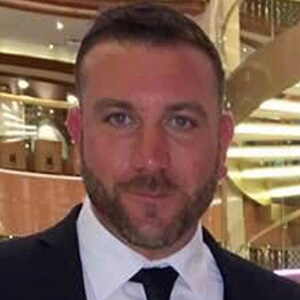
Brett Gough
Key Accounts Director, Fire and Security Systems at Mitie
Get in touch
If you want to talk to one of our security and fire safety experts about your organisation’s needs, they’re just a couple of clicks away. Fill out the form and a member of the team will get right back to you.