
 Skip to content


A new era of agentic AI and robotics will transform FM

‘Agentic AI’ promises a step-change in facilities management. In the simplest terms, it means systems that take action autonomously, moving AI from an assistive role to an operational one. Here Mitie’s Emerging Technology Lead, Andy Oldroyd, explains the momentous change ahead.
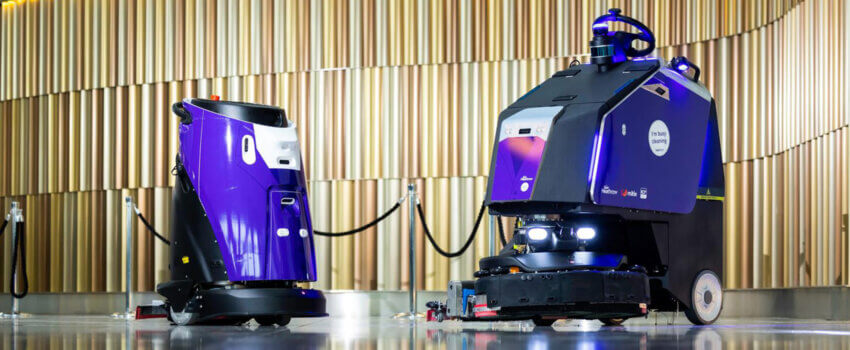
Facilities management is beginning to explore how advanced robotics and AI could work together to support safer, smarter and more efficient services. Most robotic systems in FM today operate within rigid parameters, performing predefined tasks such as scheduled floor cleaning. While effective for routine work, these systems lack the flexibility to respond to changing conditions or unexpected events. But change is coming…
A new world of exciting opportunities
Agentic AI offers a way to remove these limitations and open a world of exciting opportunities. Unlike basic automation, it introduces a decision-making capability that allows systems to interpret goals, break complex objectives into steps, adapt plans in real time and learn from the surrounding environment.
As data flows from multiple building systems and service lines become more integrated, FM will move from simple, pre-defined task automation towards a more autonomous operation. Multi-step activities can be completed independently with less human involvement. For example, a cleaning robot could detect a spill, recognise that the area needs to be cordoned off due to high footfall, complete the clean and then update the work order management system. On a large external site, an anomaly detected by a camera system could trigger a drone to launch automatically. Additional imagery from the site of the anomaly can be logged for further review.
Bringing this autonomous, agentic AI into robotic systems enables practical advantages for FM teams:
- It reduces the time spent on repetitive work, allowing routine tasks to be handled consistently in the background.
- It improves safety by taking people out of hazardous or hard to reach environments, from high level cleaning to confined space inspections.
- It frees colleagues for higher value activities, such as diagnosing complex issues, checks and making informed decisions around compliance and keeping things running.
As these capabilities mature, the role of robotics will expand beyond routine tasks towards more responsive, data-driven service models. Robots will be able to act on real-time information and behave proactively to support operations.
Strategic priorities
To realise the benefits of agentic AI in robotics, investment needs to extend beyond the machines themselves. Three key areas require focus and funding…
- Building insights
Agentic AI relies on a clear, real-time understanding of what is happening across the estate. This goes beyond 3D models and into the practical data streams that describe building conditions: occupancy patterns, footfall, air quality, spill detection, asset performance, environmental readings and more.
With these details, AI systems can make informed decisions, prioritise work autonomously and respond to changing conditions. This is the core function of a smart building, providing the awareness required for autonomous action.
- Platform-agnostic fleet management
Most robotics platforms are tied to a single manufacturer and come with proprietary control systems with limited interoperability. However, agentic AI will need to orchestrate a mixed fleet of robots from different suppliers, each with its own capabilities, communication protocols and constraints.
Managing this at scale will require an approach similar to mobile device management in IT. This requires a unified control layer that can monitor status, deploy updates, allocate tasks and coordinate behaviour across a diverse robot fleet. It’s most likely to emerge first in cleaning and hygiene, where robotic adoption is already more mature. However, the same orchestration principles will apply to drones, security robots and specialist engineering units as the ecosystem grows.
- Workforce development
As automation expands, roles will shift from manual tasks toward oversight, diagnostics and data interpretation. Teams will need training and confidence in how to supervise autonomous systems, understand AI-generated insights and intervene when exceptions occur. Developing these skills will be essential for unlocking the value of agentic robotics without increasing operational complexity.

Mitie’s approach
Mitie has already deployed one of the UK’s largest and most diverse fleets of service robots:
- Cleaning co-bots across airport and retail environments
- Drones for building fabric inspections
- Specialist robotics such as robotic lawn mowers
- Autonomous systems used in security and engineering environments
These deployments have shown how automation can deliver consistent service quality while allowing specialists to focus on more complex work.
The next phase is to explore how agentic AI could enhance this robotic fleet, extending its use across engineering, security and critical infrastructure services. The aim is to support a shift towards more proactive, transparent and resilient operations.
By using realtime insight to coordinate tasks, prioritise resources and maintain compliance, agentic AI and robotics will offer clients greater predictability and improved operational visibility. This means that as the technology matures, it’s an exciting time for FM.
Read next

Where tech meets people: How Mitie uses AI to support our experts
As AI plays an ever-growing role in all areas of facilities management, we look at how Mitie plans to use it to support its People function and strategy – providing intelligence services to those…
Accurate data: the foundation of good AI for facilities management
AI can be an invaluable tool to help facilities managers get the most from their estates. But to be truly useful, it needs to be fed with accurate and meaningful data. By Dan Blake…
Charting the evolving role of AI in facilities cybersecurity
There are two sides of security when we talk about artificial intelligence; how the technology can protect facilities operations, and how to safeguard the AI itself. By Cijo Joseph and John Cruise When we’re…